Canadian manufacturing at a crossroads
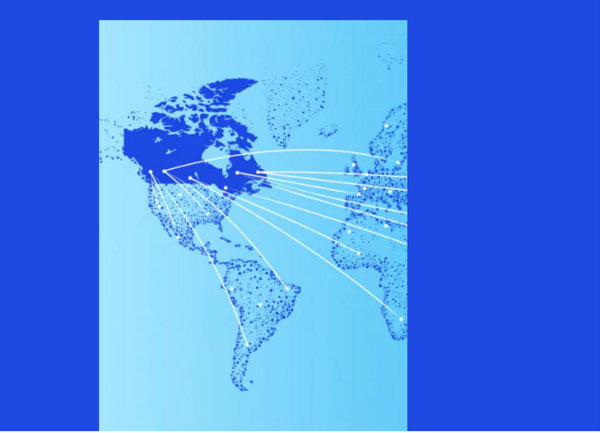
Canadian manufacturers are shifting production toward the U.S., and the movement is material. Economic pressure and trade uncertainty are accelerating this shift, but it is not purely defensive. Companies are also repositioning for growth, expanding closer to customers, supply chains and higher-margin opportunities.
As the future of the Canada-United States-Mexico Agreement hangs in the balance, KPMG Canada’s 2026 manufacturing survey shows that 42 per cent of companies have already moved or are planning to move some or all production south. Most still maintain a Canadian footprint, but the next phase will be defined by where companies place capital and whether Canada can compete for it.
The business of manufacturing in Canada is evolving quickly. Trade uncertainty, a stronger U.S. economy and differences in operating environments are reshaping where companies choose to produce, invest and grow.
This is reinforced by a U.S. manufacturing resurgence, supported by policy measures such as the Inflation Reduction Act and rapid growth in AI, data infrastructure and demand for compute power.
At the same time, Canadian manufacturing has faced persistent challenges over the past two decades. Policy shifts and repeated shocks have eroded international competitiveness. Canada’s share of the U.S. manufacturing market has not recovered, while Mexico and several Asian economies have expanded their position.
Trade uncertainty and tariffs are now acting as a tipping point, adding further pressure. Canada retains important advantages, including lower interest rates, exchange rate flexibility, political stability and a highly skilled workforce. However, structural disadvantages remain: a smaller market, fragmented regulations across provinces and higher transportation costs.
New U.S. legislation, including the One Big Beautiful Bill (OBBB), extends tax advantages for long-term operations and builds on earlier measures such as the Tax Cuts and Jobs Act.
These dynamics reflect long-standing competitiveness challenges alongside the emergence of a U.S. economy increasingly centered on technology, AI and the infrastructure required to support it.
Ali Jaffery
Partner and Chief Economist, KPMG Canada
Some companies are moving production south, while others are maintaining operations in Canada but pulling back on investment. Canada remains part of operating models, but its role in future growth is diminishing.
The sector’s deep ties to the U.S. continue to shape these decisions. Eighty-six per cent of manufacturers operate beyond Canada, and 61 per cent say their business depends on access to the U.S. market.
29 per cent have already shifted some or all production to the U.S
13 per cent are planning to do so
Altogether, 42 per cent have either moved or are planning to, enough to reshape capacity and redirect future investment. Among those considering relocation, 77 per cent expect to move within two years.
Headquarter decisions point in the same direction. While 80 per cent report no plans to move, 11 per cent expect to relocate their headquarters to the U.S. within five years. While still limited, this indicates where companies expect to anchor leadership, capital and long-term growth.
The underlying pressures are consistent across the sector, but company size shapes how quickly firms respond. Larger manufacturers tend to be more globally integrated and further along in cross-border production decisions.
The data highlights a clear difference by firm size:
< $300M:
34 per cent have moved or are planning to move some or all production to the U.S
20 per cent have already shifted some or all production to the U.S
14 per cent are planning to do so
≥ $300M:
49 per cent have moved or are planning to move some or all production to the U.S
38 per cent have already shifted some or all production to the U.S
11 per cent are planning to do so
While smaller firms show some intent to move, larger firms are further along in acting on those decisions and are nearly twice as likely to have already shifted production.
Taken together, size does not change the direction of travel, but it does influence the pace. Larger, more globally integrated firms are responding earlier and at greater scale, while smaller firms remain earlier in the cycle. This highlights both the potential scale of the shift and the likelihood that similar patterns may emerge across other sectors.
This is particularly relevant for subsectors such as food manufacturing, one of Canada’s largest manufacturing segments and closely tied to consumer products, where similar dynamics could have meaningful implications for domestic supply chains, investment and long-term competitiveness.
Cost sits at the centre of this dynamic, but it does not act alone. Tariffs and trade uncertainty create immediate pressure, alongside structural factors such as labour, operating costs, taxation, regulation and access to capital. Together with market size and supply chain efficiency, these forces are driving relocation decisions.
The reasons companies cite reflect that mix. Tariffs, trade uncertainty and lower operating costs are most often cited, reinforced by structural drivers such as market size, tax regimes and supply chain efficiency.
These dynamics are translating into tangible shifts. Production, supply chains and capital are increasingly aligning with higher-return locations.
As a result, while Canada continues to serve as a base for leadership and coordination, production and growth investment are becoming more distributed across the U.S. The challenge for business leaders is sustaining a competitive Canadian position within a more distributed operating model.
Fifty-seven per cent of companies have reduced, paused or cancelled capital expenditures:
36 per cent are scaling back capital spend
12 per cent are pausing capital spend
9 per cent are cancelling investments altogether
On R&D investment, 42 per cent report scaling back or pausing
Operations largely remain in place, but investment is slowing. That gap matters because it compounds. Capacity does not shift all at once; it evolves through repeated decisions to defer or reduce investment. Equipment ages, productivity gains slow or reverse, and new capabilities emerge elsewhere.
Fifty-two per cent describe their current position as “endurance mode.” In the short term, this may be a rational response to uncertainty. Over time, however, reduced investment makes it more difficult to rebuild competitiveness.
Meanwhile, 32 per cent report higher margins when producing and selling within the U.S. than when exporting from Canada, and 35 per cent report stronger margins on international sales from the U.S.
These decisions are not being deferred. Companies are acting under current conditions rather than waiting for greater trade or policy clarity, and the effects are already taking hold.
While tariffs and cost pressures are a trigger, many companies are also pursuing growth by expanding closer to customers and capturing stronger margins.
Customer demand and supply chain dynamics are reinforcing this shift. As production networks reorient toward the U.S., companies are following to remain relevant with key buyers and position themselves within more efficient, higher-return ecosystems.
There is a risk that these shifts accelerate quickly. As capital is redirected and supply chains reconfigure, decisions begin to lock in, making reversal more difficult over time.
“Buy Canada” momentum is supporting demand
When manufacturers describe the conditions that would inform future investment decisions, a consistent set of priorities emerges: greater certainty of free trade and tariff relief, lower corporate taxes, improved cost of living and housing affordability, cheaper energy and access to skilled workers.
Capital remains mobile and continues to flow toward jurisdictions that perform more strongly against those measures.
Even so, investment in Canada has not stopped. Sixty per cent of manufacturers report significant spending on advanced manufacturing and robotics, although those decisions are becoming increasingly selective.
Importantly, 55 per cent of manufacturers say it is critical that the “Buy Canadian” movement continues:
47 per cent report increased sales linked to the movement
50 per cent say it has improved employee morale
This reflects both a market response and a workforce dynamic that reinforce each other.
The next moves will determine Canada’s role
Change is accumulating through individual decisions.
Each investment, production shift and hiring decision contributes to a broader pattern that gradually reshapes the industrial base, becoming more visible as changes compound.
Canada retains real advantages, including a highly skilled workforce, broad trade access, political stability and strong integration with North American markets. These factors continue to matter, even as cost and competitiveness carry more weight in decision-making. Over time, shifting global trade dynamics may reinforce Canada’s position where U.S. production faces higher input costs and Canada offers a lower-tariff base.
Companies are operating within tighter parameters, and decisions increasingly reflect current conditions and near-term expectations. Leadership teams are defining their footprint more explicitly, clarifying the role Canada plays, the level of investment that supports that role and how it compares with other markets.
The logic is straightforward: investment shapes capacity, and capacity shapes growth.
Canada will continue to play a role in the manufacturing equation. The question is the role it will play, and that will depend on how effectively it competes for capital in a system that increasingly rewards cost, clarity and return.
What manufacturers can do now
Manufacturers are already repositioning operations and capital in response to shifting production, supply chains and investment. Key actions include:
Define your cross-border role by clarifying what Canada and the U.S. are optimized for
Prioritize capital with discipline, focusing on high-return investments such as automation and advanced manufacturing
Accelerate automation and AI adoption to improve efficiency and margins
Redesign supply chains to balance cost, resilience and proximity to key markets
Optimize tax and trade structures to improve after-tax returns
Leverage market positioning where it drives demand or differentiation
Plan for multiple scenarios by stress-testing strategies under different trade and policy outcomes
These actions are not only defensive. They position organizations to respond to current pressures while remaining competitive as conditions evolve.
KPMG Canada supports manufacturers in navigating these shifts by aligning growth, governance and performance strategies to evolving market conditions.
Our team helps organizations translate these pressures into clear, actionable decisions, including:
Tax, trade and regulatory navigation across U.S. tax, customs and compliance
Capital allocation and investment prioritization, including scenario modelling
Supply chain and operating model transformation
Cost, performance and productivity improvement through analytics and AI
Growth and strategic transactions, including partnerships and M&A
Backed by deep industry experience and a global network across Audit, Tax and Advisory, we help clients respond to immediate pressures while positioning for long-term competitiveness.
Connect with us



Industrial Markets
Explore insights and resources to help your business respond to tariffs, manage supply chain challenges, navigate international trade, and plan for what's next.
vid - session cookie used to collect anonymous information for analytics, and provide content and navigation in this content track.
vid - session cookie used to collect anonymous information for analytics, and provide content and navigation in this content track.